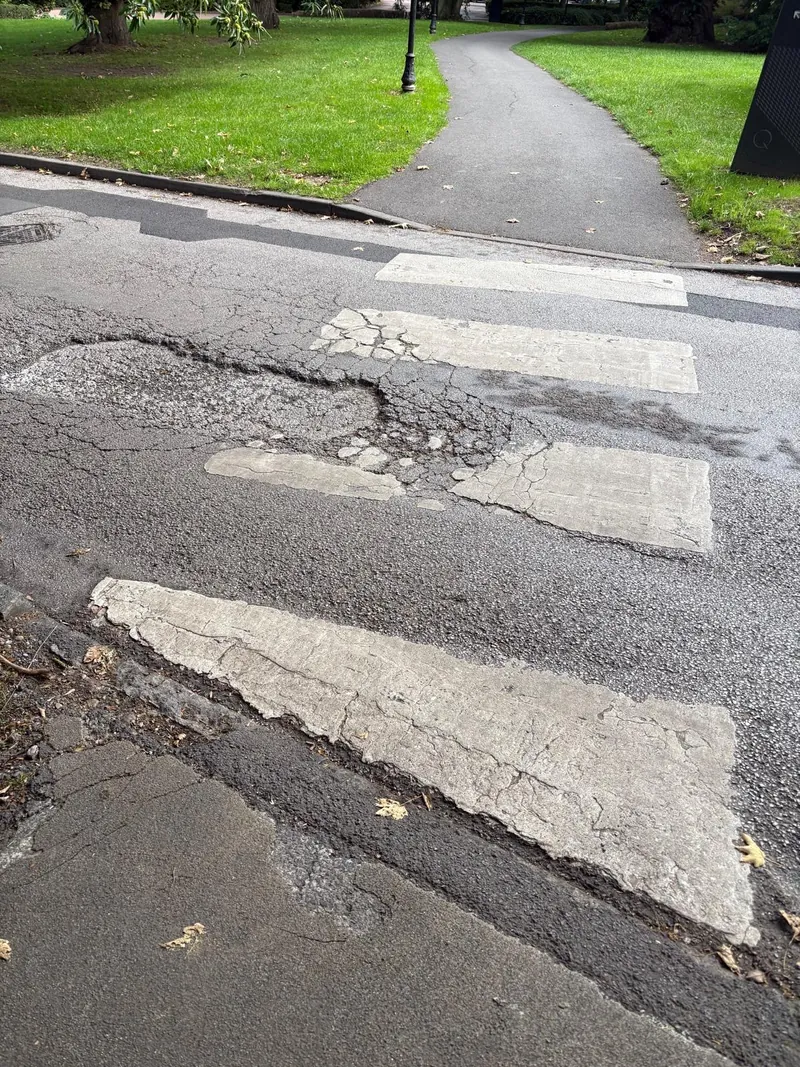
 01Actual project
Pothole
Material has broken away
- Likely cause
- Water, traffic and weakened material have combined to create a local failure.
- Repair approach
- Cut or plane back to sound asphalt, check the layers below and rebuild what has failed.
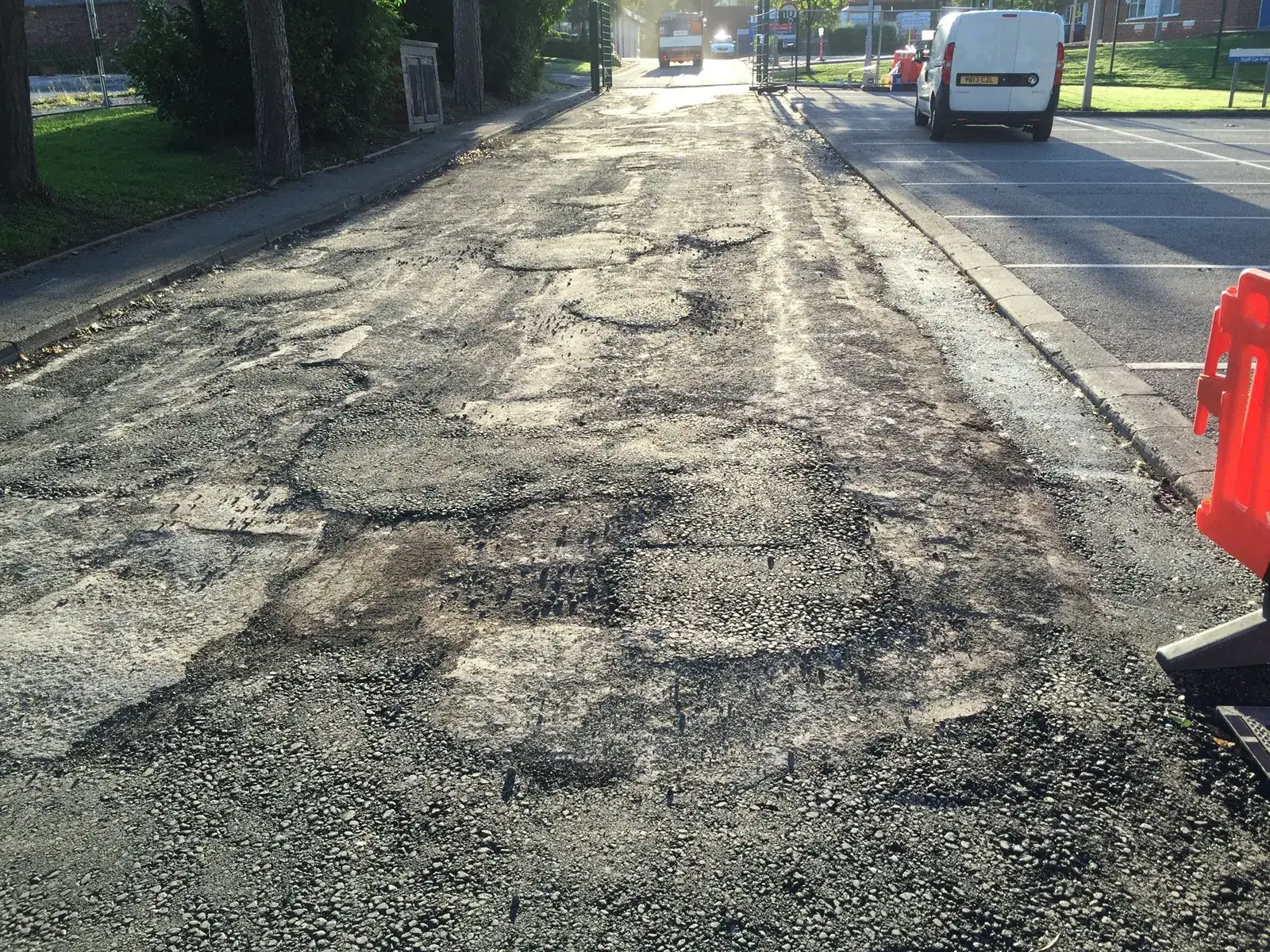
Visual surface guide
Compare six common signs of asphalt failure and understand when a local repair—or something more substantial—may be needed.
Start with the pattern
The shape of the damage, the condition around it, drainage and vehicle loading all help indicate why an asphalt surface has failed.
Use the photographs below as an initial guide. The repair depth and extent still need to reflect what is actually found on site.
Six common warning signs
Match the overall pattern rather than one isolated crack. Several defect types often appear together.
01Actual projectMaterial has broken away
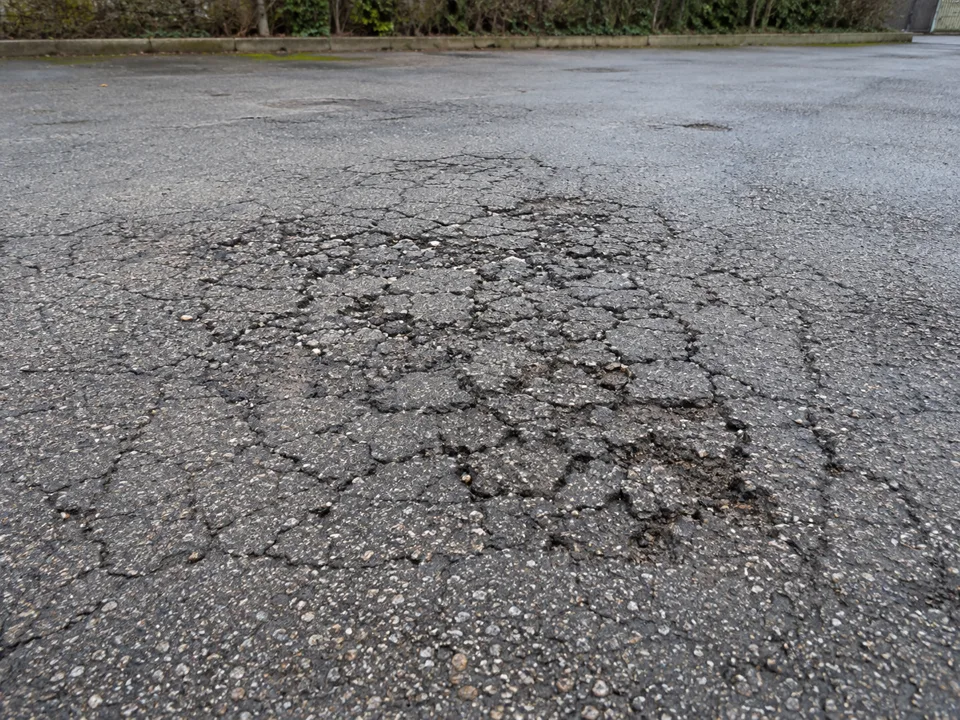 02
02Interconnected fatigue cracks
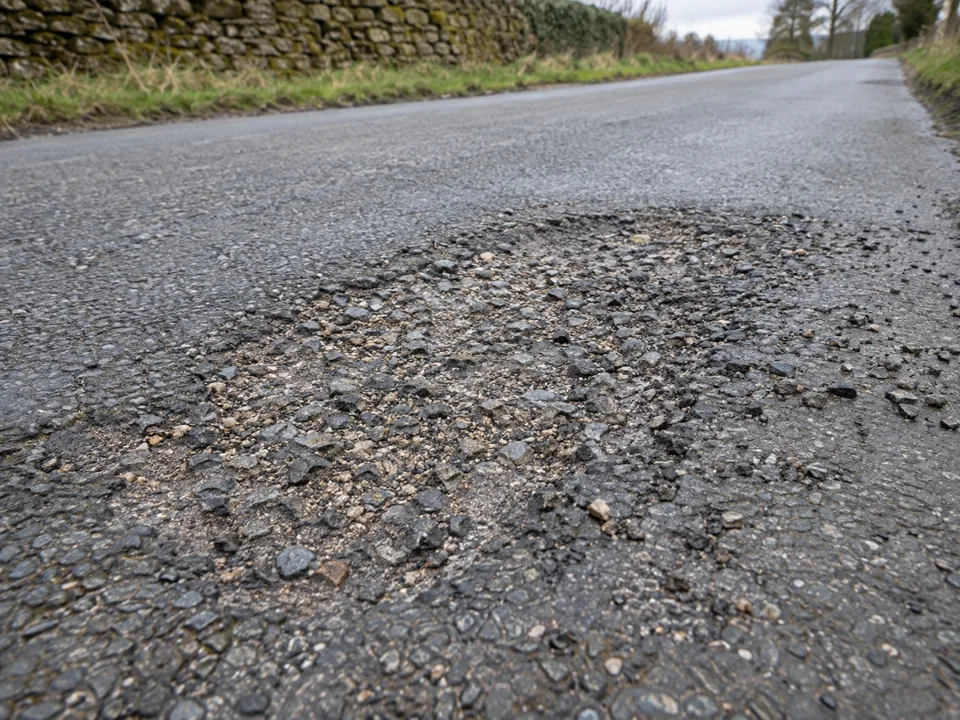 03
03Loose stone and surface loss
 04
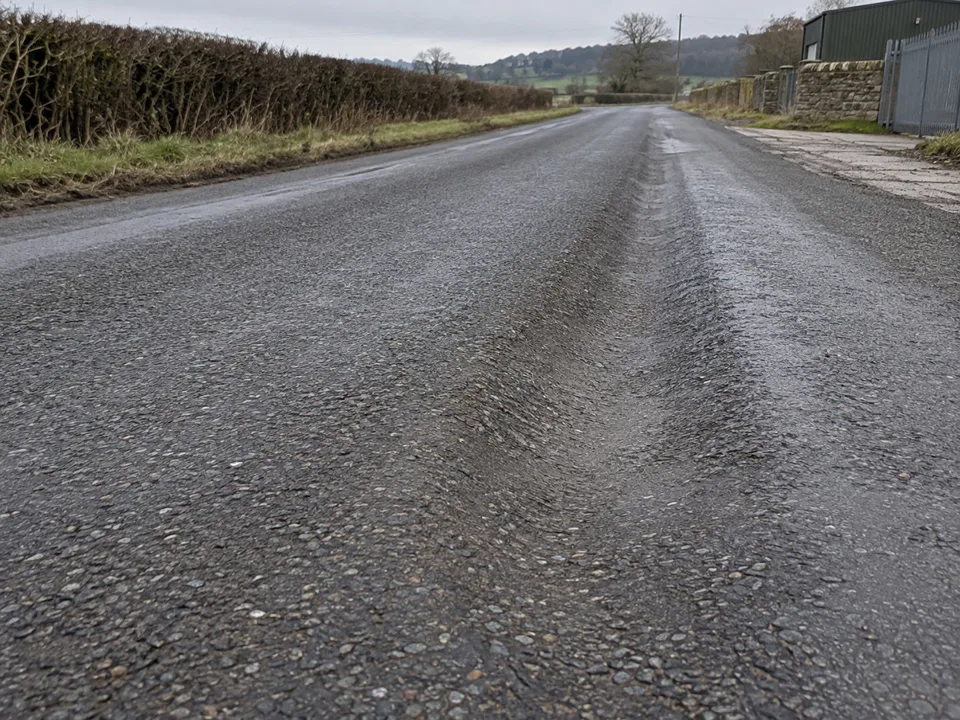
04Wheel-path deformation
 05
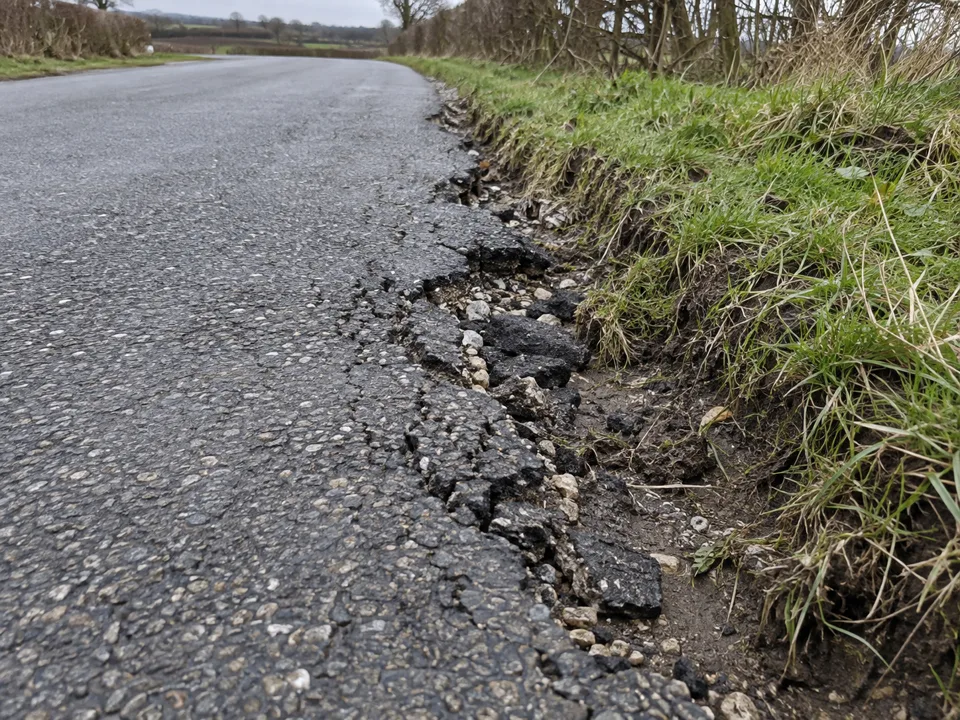
05Cracking beside a verge or joint
 06
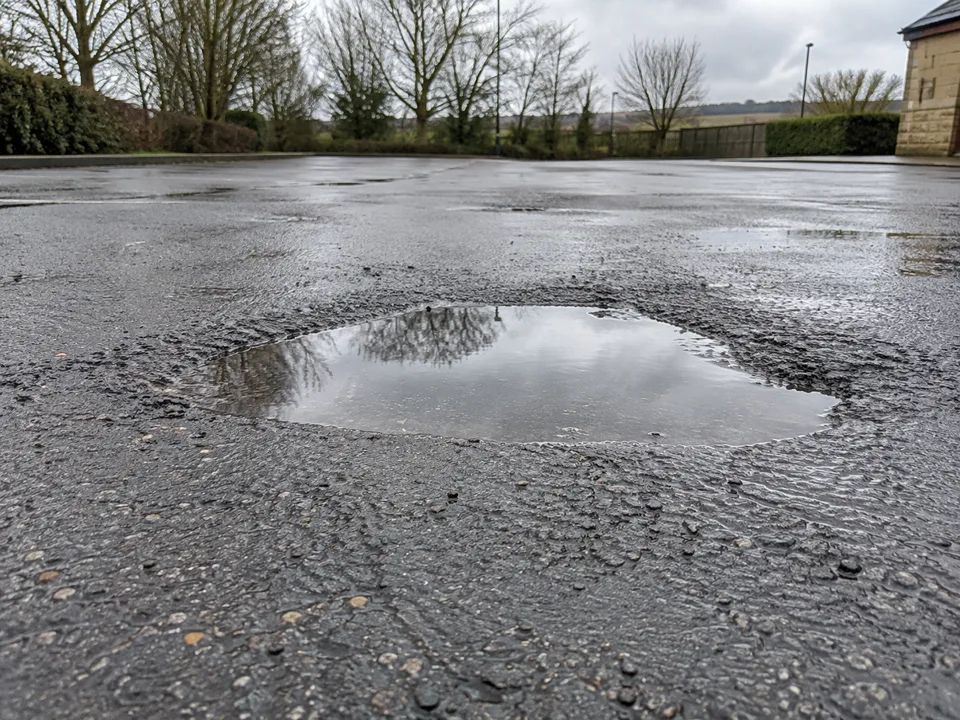
06Ponding after rainfall
The first photograph is from an Atkinson Surfacing project. Remaining images are realistic visual examples used to help identify typical surface patterns.
An isolated failure may suit a local repair. The same damage repeated across a car park, yard or access road can indicate wider deterioration and make planned resurfacing the better-value option.
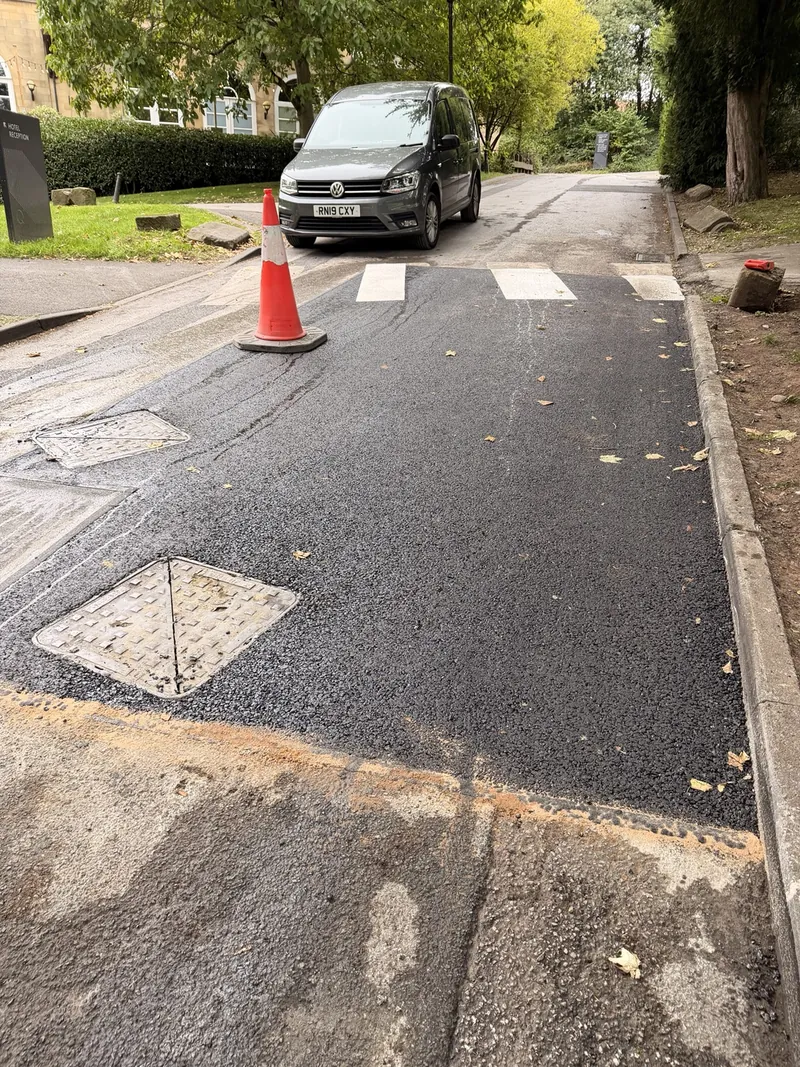
This emergency repair at Oulton Hall shows why the surrounding asphalt matters. The damaged crossing and failed material were treated as one repair area rather than filling only the most obvious hole.
Initial assessment
Send the site postcode, approximate dimensions and photographs from close up and further back. We can discuss the likely scope and arrange a survey where needed.